
Start in the attic
The attic is the best place to catch a problem early, because it's where water shows up first. Go up on a dry day with a good flashlight, step only on framing, and look at the underside of the roof deck and the insulation.
- Dark stains or water lines on the roof boards or rafters, especially around chimneys, vent pipes and valleys.
- Damp, matted or discolored insulation.
- Pinholes of daylight through the roof deck.
- Rusty nail tips or frost on nails in cold weather, a sign of moisture in the attic air.
- A musty smell or visible mold on the deck.
- Bath or kitchen fans that vent into the attic instead of out of the house.
Not everything wet in an attic is a roof leak. Condensation from poor ventilation can look very similar, and many Herndon homes, most of which were built between 1970 and 2000 according to a town housing study, have had their attics changed over the years in ways that affect airflow. If you see moisture, note whether it appears after rain or on cold, dry days. That detail helps tell a leak from condensation.
Check the ceilings and walls
- Yellow or brown ceiling stains, especially near exterior walls or below chimneys and skylights.
- Peeling paint or bubbling drywall on upper-floor ceilings.
- Stains around the frame of a skylight or a dormer window.
- Water marks that grow after storms.
Remember that water travels. A stain in the middle of a bedroom ceiling may come from a roof penetration several feet uphill. Photograph stains with the date, and if one changes after a particular storm, note the weather. That record is genuinely useful during an inspection.
Look at the shingles from the ground
Use binoculars from the yard or the street. There's no reason to climb a ladder or walk the roof yourself; that's how people get hurt.
- Curling or cupping shingle edges.
- Cracked, torn or missing shingles, often after a windy storm.
- Bald patches where the protective granules have worn off.
- Dark streaks or moss on shaded slopes.
- Lifted or wavy areas that might suggest decking problems underneath.
- Bent or loose flashing at the chimney or along walls.
Check the gutters and the yard
Shingle granules collect in gutters and at downspout outlets. Some granule loss is normal, especially on a new roof, but heavy, steady granule loss on an older roof is a sign the shingles are wearing out. After storms, look for shingle pieces in the yard. Overflowing gutters or water running behind the gutter can point to clogged gutters or a problem at the roof edge.
Consider the roof's age
Asphalt shingle roofs commonly last 20 to 30 years. If you don't know your roof's age, home purchase records or past permit records can help. Inside the Town of Herndon, the Town's Building Inspections office handles permits; outside town limits, it's Fairfax County. Age isn't a diagnosis on its own, but an older roof with any of the signs above deserves a closer look.
What to do when you find something
- Protect the interior: move belongings, catch drips, and keep electrical fixtures dry.
- Take dated photos of what you found inside and outside.
- Stay off the roof.
- Schedule an inspection, especially if the sign appeared after a storm.
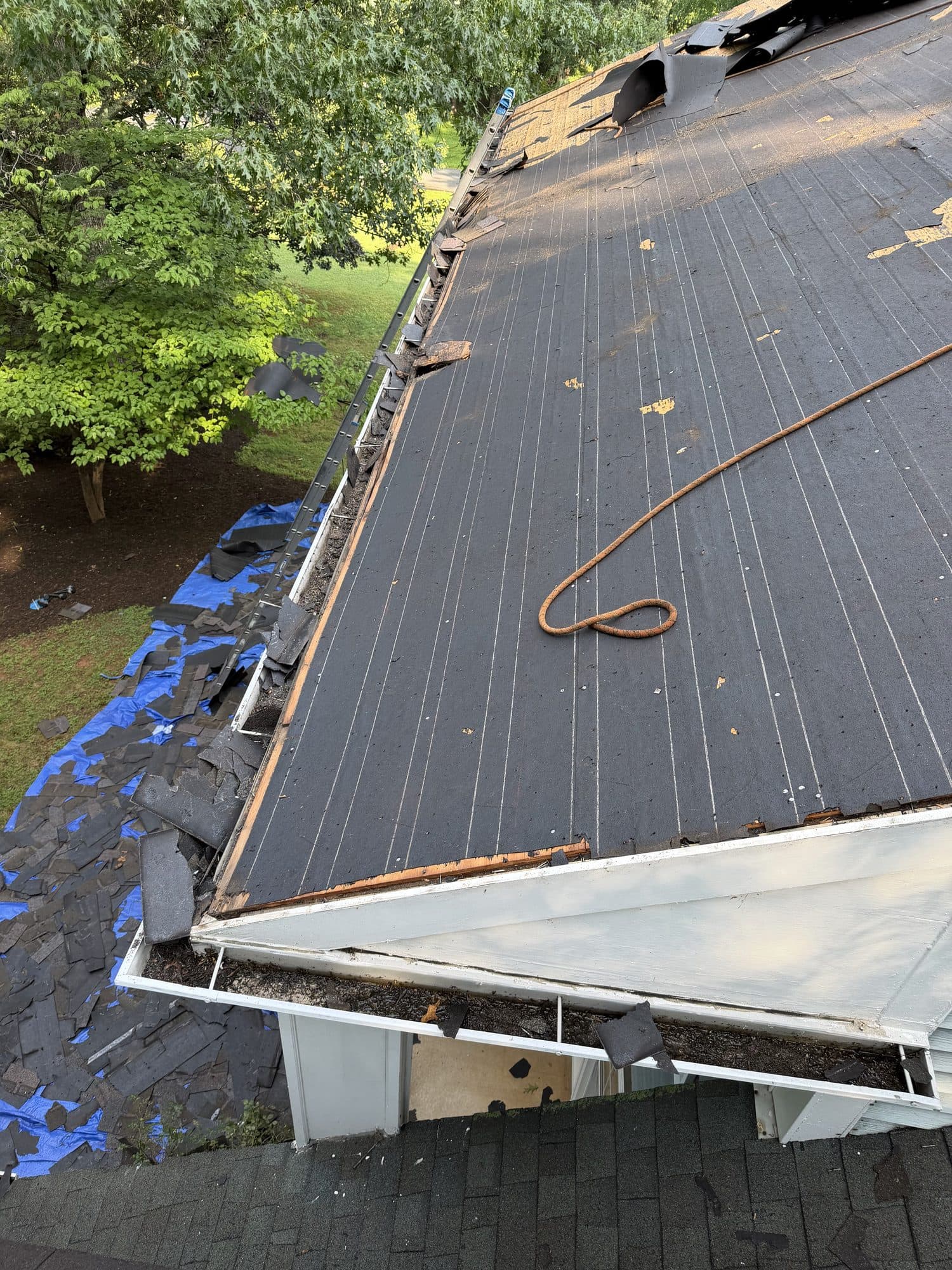
When a roof is torn off, the deck tells the full story. This photo is from a Roofing Roughnecks re-roofing project in Reston.
Townhouse and attached-home clues
If you live in one of Herndon's townhouse communities, add two checks. First, look at the line where your roof meets your neighbor's: gaps, lifted shingles or mismatched flashing there can let water into either unit. Second, if you share an attic space or firewall, look at both sides of it for staining. A leak above a neighbor's unit can sometimes show up on your side, so talk to your neighbor before assuming the problem is yours alone.
Related pages
Is a small ceiling stain worth worrying about?▸
Yes, it's worth checking. A small stain can mean a slow leak that has been wetting insulation and framing for a while. Catching it early usually means a smaller repair.
Are granules in the gutter a problem?▸
A few are normal, especially on a new roof. Heavy, ongoing granule loss on an older roof is a sign the shingles are wearing out.
Can attic moisture come from something other than a leak?▸
Yes. Condensation from poor ventilation or from bath fans venting into the attic can look like a roof leak. Noting whether it appears after rain helps tell the difference.
Should I go on the roof to look?▸
No. Use binoculars from the ground and check the attic from the inside. Leave the roof surface to a professional.