Before anyone climbs up
A useful inspection starts with a conversation. What did you notice, and when? Does the leak show up in every rain or only in wind-driven storms? How old is the roof, and what's been repaired? Is the house a townhouse, in an HOA, or in the Town of Herndon's historic district? These answers point the inspection to the right places and shape what's realistic to recommend.
The roof surface
- Shingle condition on every slope: curling, cracking, blistering, granule loss, missing or lifted tabs.
- Signs of wind or storm damage, including broken seal strips that are hard to see from the ground.
- Soft spots or waviness that could mean deck problems.
- Moss, algae streaks and debris build-up, especially in shaded valleys.
- Earlier repairs, and whether they match and are holding.
- Whether there is more than one layer of shingles.
Flashing and penetrations
- Chimney flashing on all sides, including the uphill side.
- Step flashing and counterflashing where roofs meet walls.
- Skylight flashing and the skylight frame.
- Plumbing vent boots, which commonly crack with age.
- Exhaust vents, roof vents and their collars.
- Valleys, where water concentrates.
Edges and drainage
- Drip edge at the eaves and rakes.
- The first course of shingles and how it laps into the gutter.
- Gutters: whether they're clogged, sagging or pulling away from the fascia.
- Fascia and soffit condition, which can reveal water getting behind the gutters.
Ventilation and the attic
When the attic is accessible and relevant, it's often the most informative part of the inspection. The underside of the deck shows leaks, stains and daylight. Insulation shows where water has been. Nail tips, frost and mold point to moisture and ventilation problems. Intake vents at the soffits should be clear and exhaust vents near the ridge working. In a lot of homes built between the 1970s and 1990s, which describes most of Herndon according to a town housing study, attics have been changed over the years, so this check matters.
Inside the house
If there's a reported leak, the inspector should look at the ceiling or wall stain and trace it back to the roof above, remembering that water can run along framing before it shows up indoors.
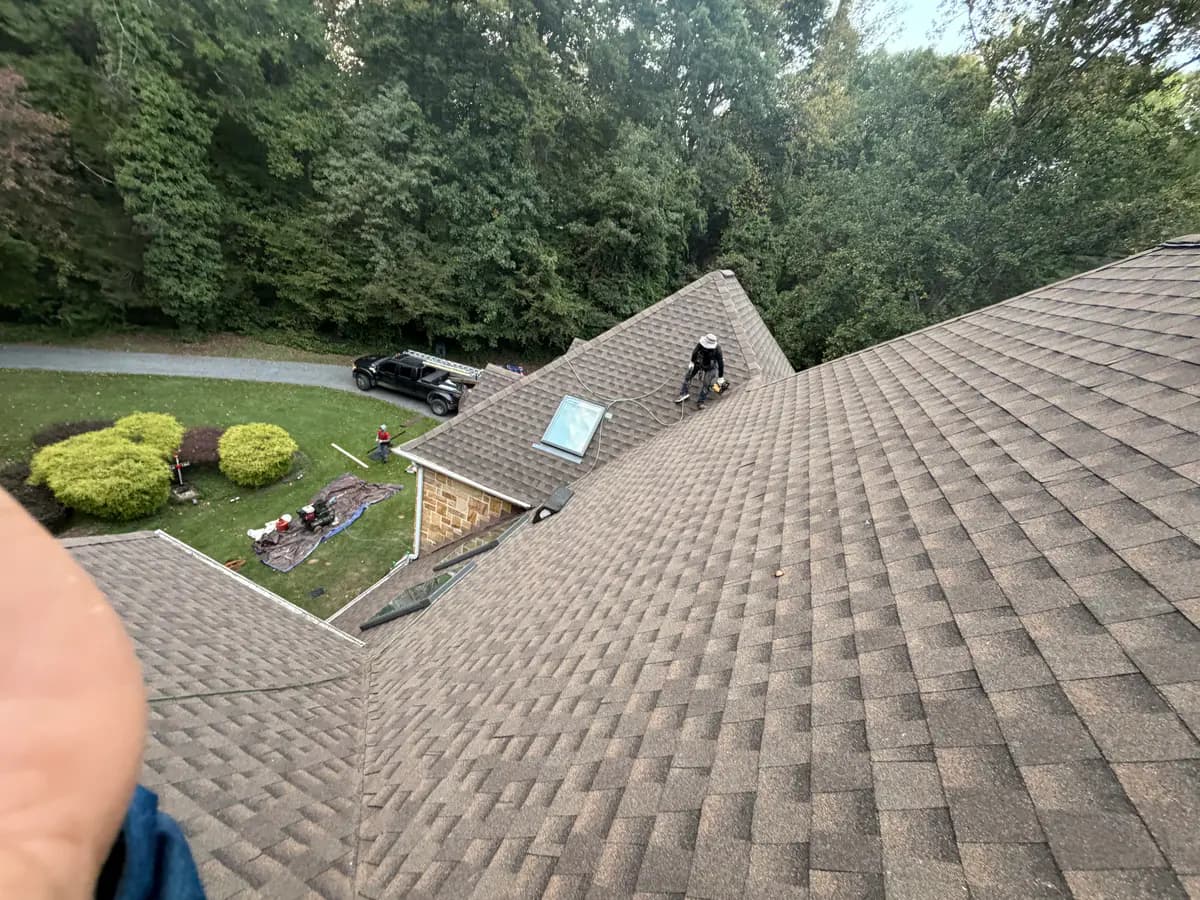
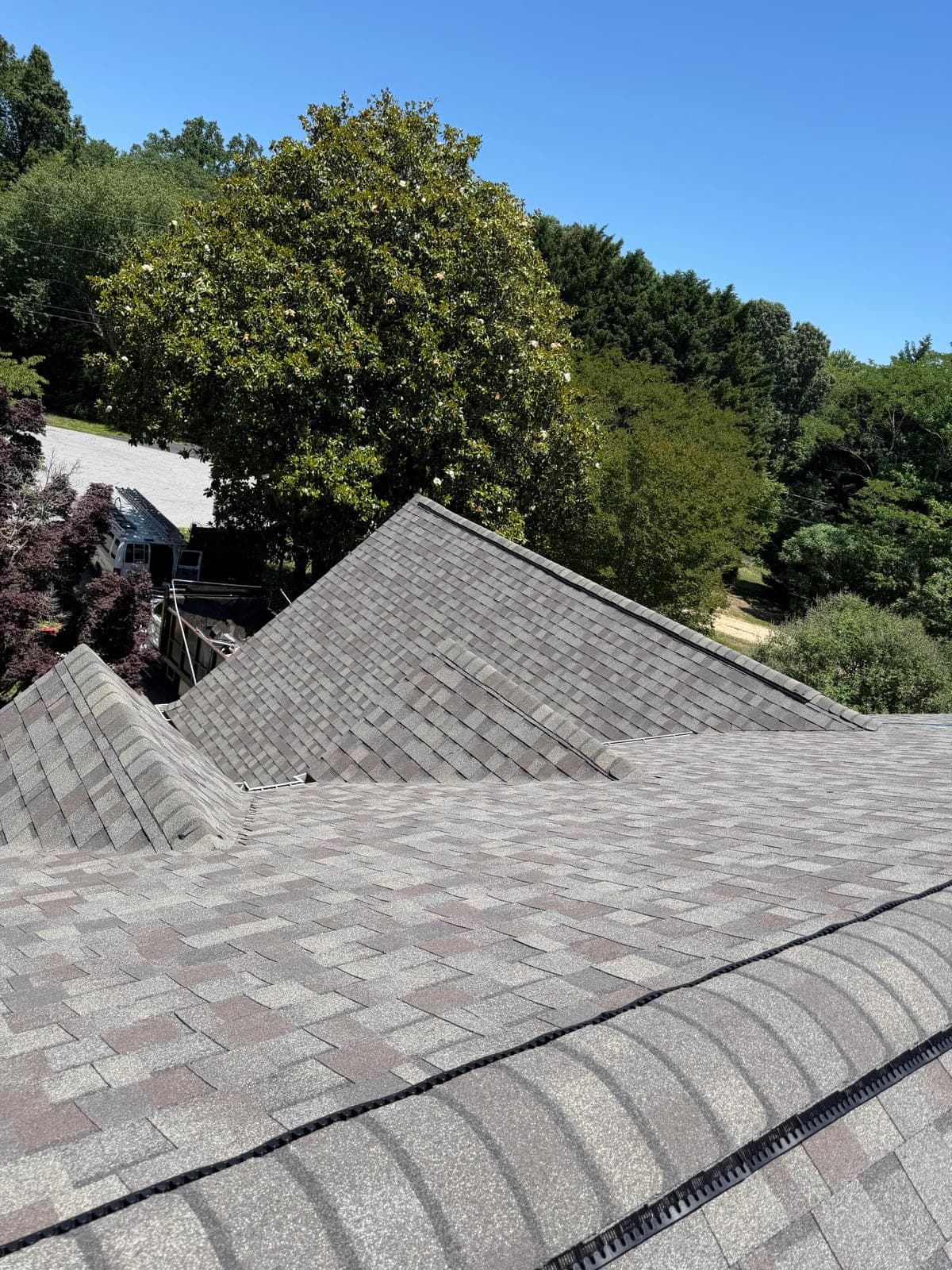
Skylights and valleys, shown here on Roofing Roughnecks projects in McLean and Ashburn, are two details every inspection should check closely.
What you should get afterward
- A plain explanation of what was found, with photos where helpful.
- A recommendation (repair, replacement or no work yet) and the reasoning behind it.
- If work is recommended, a written scope listing what's included and excluded.
- A note on permits and approvals for your address: Town of Herndon or Fairfax County, HOA, historic district.
What an inspection can't tell you
Some things can only be seen once the old roof is off, especially the condition of the deck under the shingles. A good inspection points out where that uncertainty exists, and a good scope explains how hidden damage will be handled if it turns up.
The same goes for leaks that only appear in unusual weather, such as a driving rain from one direction. If the inspection can't pin down the source with confidence, a good roofer will say so and explain the next step, rather than guessing and selling you more roof than you need.
How to prepare for an inspection
- Clear a path to the attic hatch or pull-down stairs.
- Gather any records: roof age, past repairs, earlier inspection reports.
- Have your dated photos of stains or storm damage ready.
- Know whether you're in an HOA, and whether the house is inside the Town of Herndon limits, if you can.
- Mention any upcoming plans, like solar, a sale or an addition, that could affect the recommendation.
An inspection is also a good time to ask questions you've been wondering about, such as whether the gutters are sized and pitched well or whether a skylight is worth keeping. The more the roofer understands about your plans, the more useful the recommendation will be.
Related pages
Does a roof inspection include the attic?▸
It should, when the attic is accessible and relevant to the concern. The attic often shows problems that aren't visible from outside.
Can a roof be inspected with a drone or satellite?▸
Aerial images help with measurement and a general overview, but some details, like broken seal strips or soft decking, need an in-person look.
When should I get my roof inspected?▸
After a significant storm, when you see signs of a leak, before buying or selling a home, and as the roof approaches the 20-to-30-year range where asphalt shingles commonly wear out.
Will an inspection always lead to a sales pitch?▸
It shouldn't. If the roof doesn't need work yet, a good roofer will say so.