
Why ventilation matters
Attic ventilation moves air in low, usually at the soffits, and out high, usually at the ridge or through roof vents. When that airflow works, the attic stays closer to outdoor temperature. When it doesn't, summer heat builds up under the deck and winter moisture from the house can condense on the underside of the roof. Both can shorten the life of the roof and can produce stains that look like leaks.
Northern Virginia gets both hot, humid summers and cold winters, so ventilation problems can show up in either season. In homes built between the 1970s and 1990s, which describes most of Herndon's housing according to a town study, attics have often been changed over the years: insulation added over soffit vents, bath fans vented into the attic instead of outside, or extra roof vents added without balancing intake. Those changes are worth checking before a new roof goes on.
Ventilation work we handle
- A ventilation review as part of every full roof replacement.
- Ridge vent installation where the roof design suits it.
- Correcting ventilation issues found during roof repairs.
- Checking exhaust vents and their roof penetrations for leaks.
Ventilation changes should match the roof and attic you have. We won't add vents automatically; if we recommend a change, the written scope will say what it is and what problem it addresses.
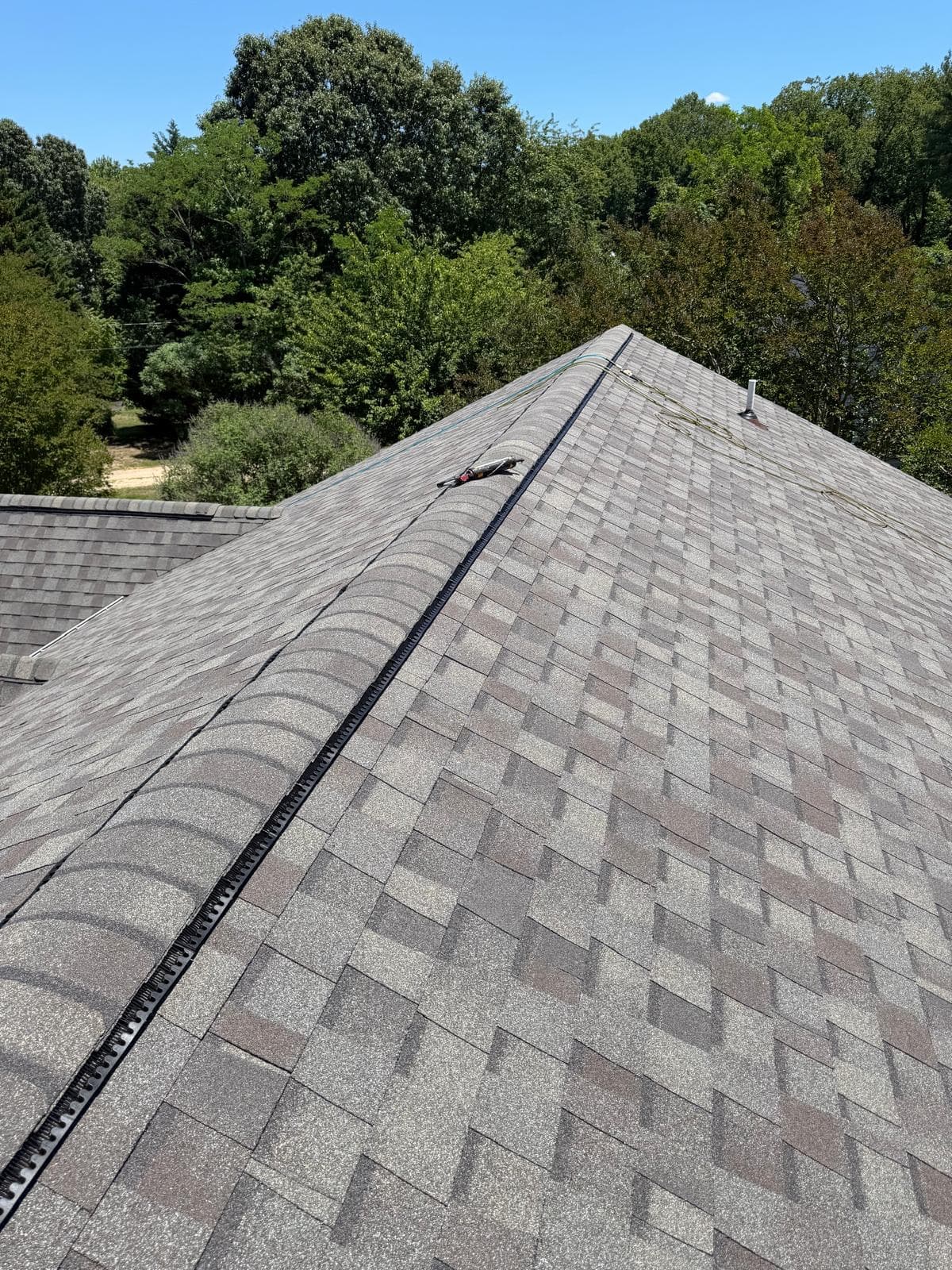
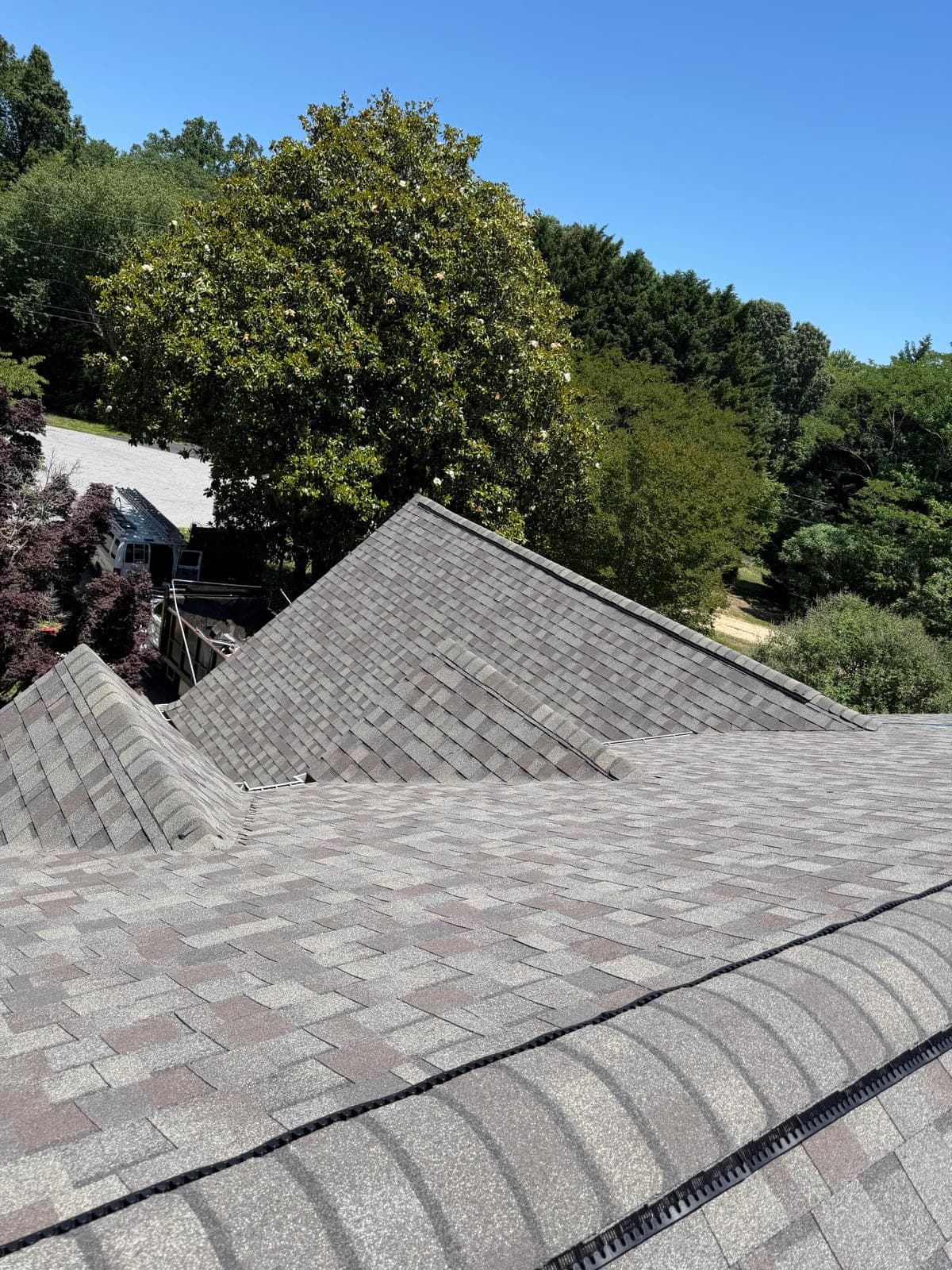
These close-ups are from a Roofing Roughnecks roof replacement in Ashburn, in Loudoun County: a new ridge vent along the peak and finished valleys below it.
Roof edges and gutters
Where the roof meets the gutter is where most of the water leaves the house, and it's a common place for small problems: missing or bent drip edge, shingles that stop short of the gutter, or gutters packed with leaves that back water up under the first course of shingles. On a replacement, we look at how the eave edge is detailed so water lands in the gutter rather than behind it. Our guide to gutters, drip edge and flashing explains these parts in plain language.
For gutter protection, Roofing Roughnecks installs Leaf Relief gutter guards, a system designed to keep leaves and debris out while letting water flow through. Gutter guards can be worth discussing if your Herndon home sits under mature trees.
Signs of a ventilation problem
- Upstairs rooms that stay noticeably hot in summer even with the air conditioning running.
- Frost or rusty nail tips on the underside of the roof deck in winter.
- Damp or compressed insulation with no obvious leak above it.
- Shingles that look worn or blistered sooner than the rest of the neighborhood's roofs.
- Soffit vents blocked by insulation or painted shut.
None of these proves a ventilation problem on its own, but any of them is worth mentioning when we inspect your roof. On a townhouse, ventilation options can be more limited because of shared walls and roof lines, so the plan has to fit the unit you have.
Related pages
Can poor ventilation cause what looks like a leak?▸
Yes. Condensation in a poorly ventilated attic can drip onto insulation and ceilings and look a lot like a roof leak. An inspection helps tell the two apart.
Do I need a ridge vent?▸
Not every roof suits one. It depends on the roof shape, the existing vents and the intake at the eaves. We'll recommend what fits your roof.
Do you install gutter guards?▸
Roofing Roughnecks installs Leaf Relief gutter guards. Ask about them when we look at your roof.
Talk to a Herndon-based roofer
Call (703) 731-9208 (Monday – Saturday, 8:30 AM – 6:00 PM) or use the request-an-estimate page. We'll look at the roof and put the recommended scope in writing before any work starts.
Request an Estimate